This post originally appeared on Publishers Weekly.
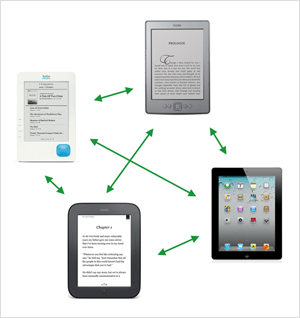 Imagine buying a car that locks you into one brand of fuel. A new BMW, for example, that only runs on BMW gas. There are plenty of BMW gas stations around, even a few in your neighborhood, so convenience isn't an issue. But if one of those other gas stations offers a discount, a membership program, or some other attractive marketing campaign, you can't participate. You're locked in with the BMW gas stations.
This could never happen, right? Consumers are too smart to buy into something like this. Or are they? After all, isn't that exactly what's happening in the ebook world? You buy a dedicated ebook reader like a Kindle or a NOOK and you're locked in to that company's content. Part of this problem has to do with ebook formats (e.g., EPUB or Mobipocket) while another part of it stems from publisher insistence on the use of digital rights management (DRM). Let's look at these issues individually.
Platform lock-in
I've often referred to it as Amazon's not-so-secret formula: Every time I buy another ebook for my Kindle, I'm building a library that makes me that much more loyal to Amazon's platform. If I've invested thousands or even hundreds of dollars in Kindle-formatted content, how could I possibly afford to switch to another reading platform?
It would be too inconvenient to have part of my library in Amazon's Mobipocket format and the rest in EPUB. Even though I could read both on a tablet (e.g., the iPad), I'd be forced to switch between two different apps. The user interface between any two reading apps is similar but not identical, and searching across your entire library becomes a two-step process since there's no way to access all of your content within one app.
This situation isn't unique to Amazon. The same issue exists for all the other dedicated ereader hardware platforms (e.g., Kobo, NOOK, etc.). Google Books initially seemed like a solution to this problem, but it still doesn't offer mobi formats for the Kindle, so it's selling content for every format under the sun — except the one with the largest market share.
EPUB would seem to be the answer. It's a popular format based on web standards, and it's developed and maintained by an organization that's focused on openness and broad industry adoption. It also happens to be the format used by seemingly every ebook vendor except the largest one: Amazon........
http://radar.oreilly.com/2012/02/unified-ebook-format-end-drm.html
No comments:
Post a Comment